
MP01Marker heroImage / video · to be added
PL / SERVICE_05 / Marker Intelligence
Empty fabric has a cost.
BETTER MARKER. BETTER UTILISATION.
You don’t only buy fabric. You buy usable area.
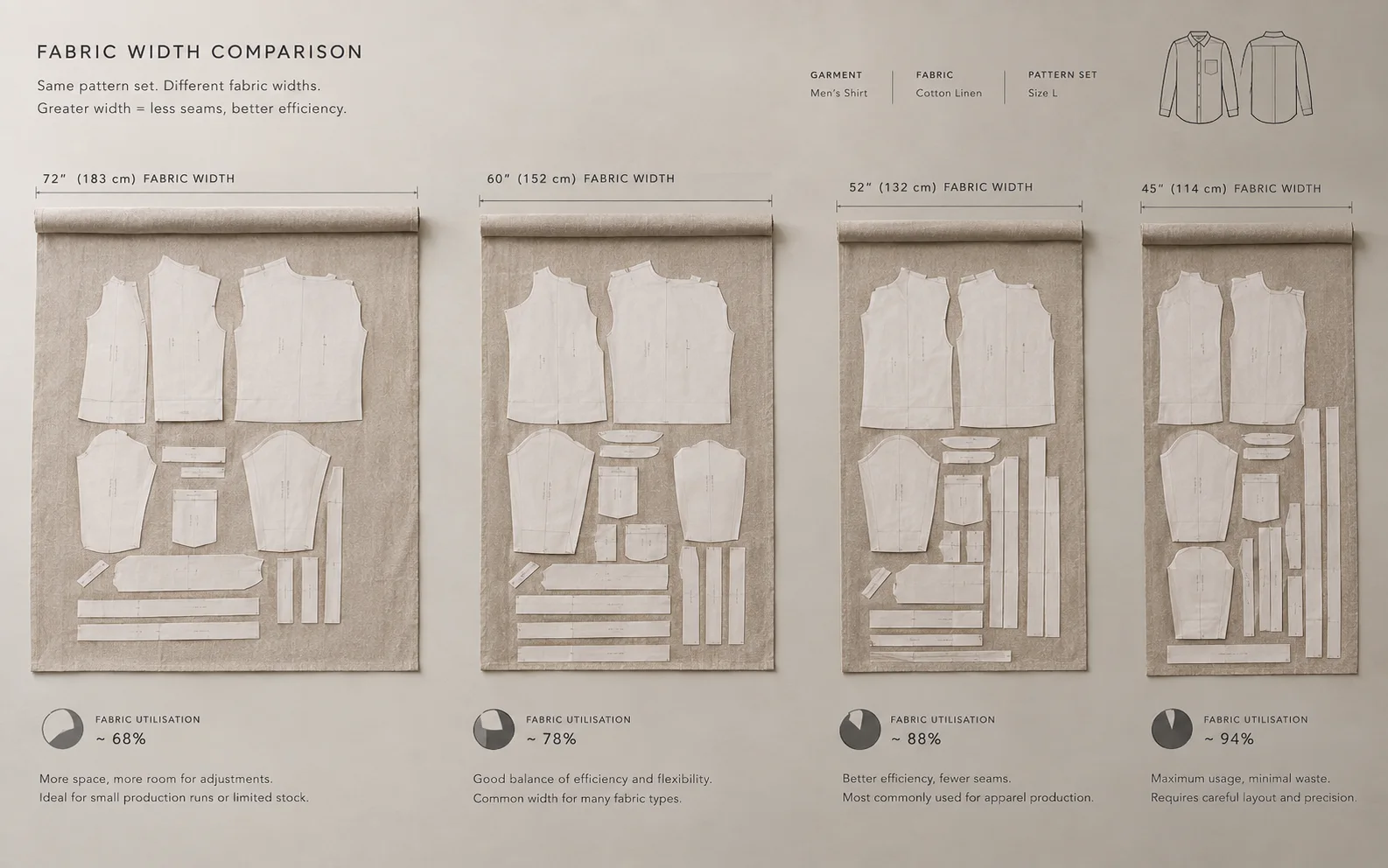
A marker determines how garment pattern pieces are arranged within the available fabric width.
The objective is to achieve efficient utilisation while respecting the technical requirements of the garment and fabric.
Marker inputs
What shapes the marker.
Reduce the space between the pieces.
MARKER_EFF78.6%
MARKER_EFF82.9%
MARKER_EFF86.4%
Higher marker efficiency can reduce consumption, but optimisation must always respect pattern and fabric restrictions.
H08Marker optimisation (shared with Home)Image · to be added
0.06 metre is almost nothing.
0.06 M×10,000 pcs= 600 metres
Until production multiplies it.
Small consumption differences can become meaningful at scale.
Marker planning therefore connects technical efficiency with garment costing.
Costing marker
Know the consumption before you quote.
Costing markers can help estimate fabric consumption during product costing and commercial planning.
Production marker
Plan for the actual cut.
Production markers can be developed around the required size ratio, fabric width and technical cutting conditions.