
Different garments. Different engineering.
Pattern development changes with silhouette, construction, fabric behaviour, fit, movement and end use.
Pattern Lab India supports technical development across menswear, womenswear, kidswear, uniforms, workwear and selected specialised apparel categories.
Structure. Balance. Repeatability.
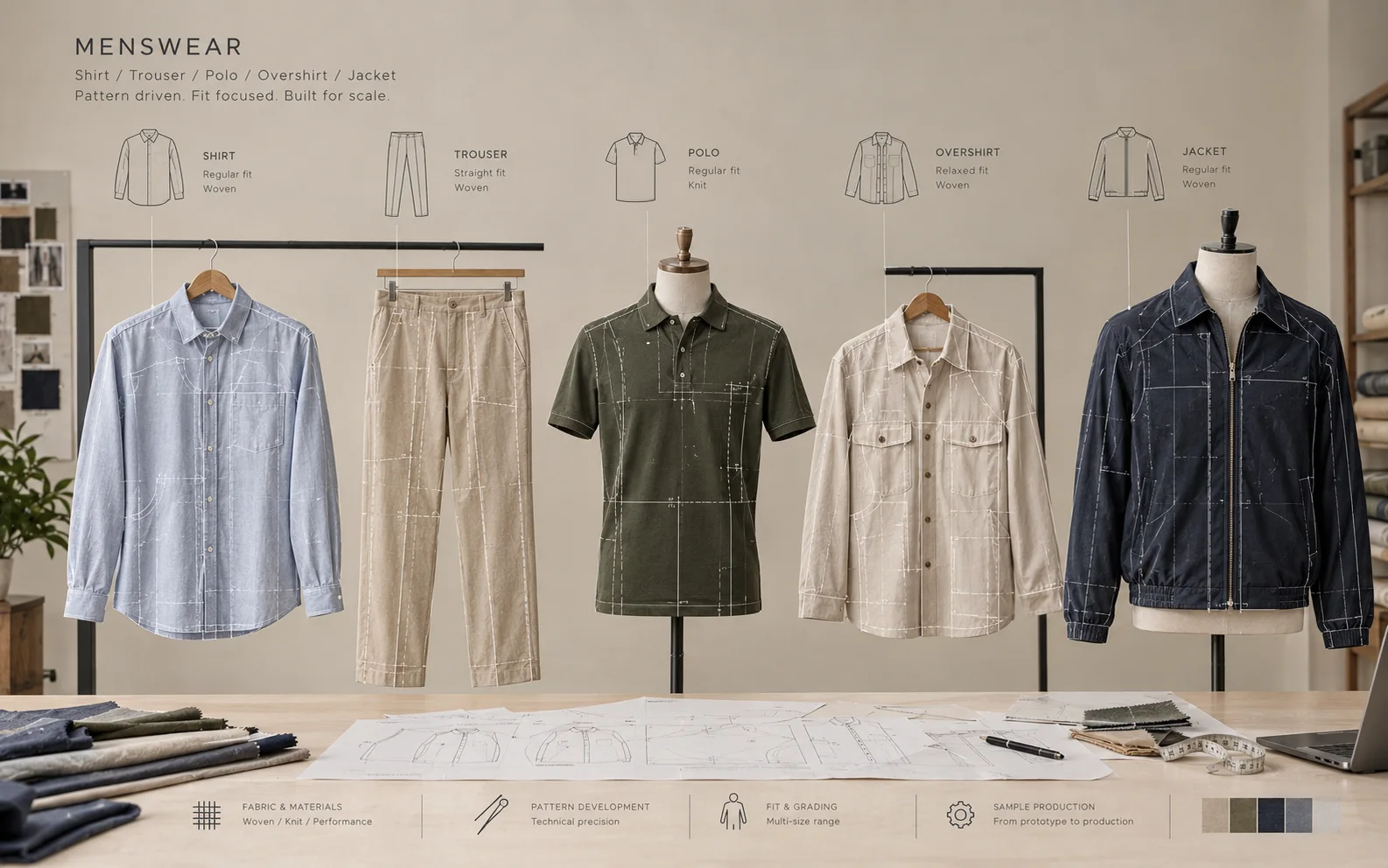
Menswear development often relies on controlled proportion, construction accuracy and consistent fit across styles and sizes.
Selected menswear categories
TWO GARMENTS. TWO ENTIRELY DIFFERENT PATTERN SYSTEMS.
Technical focus
- Shoulder Balance
- Chest Ease
- Armhole Shape
- Sleeve Pitch
- Collar Construction
- Cuff Construction
- Placket
- Yoke
- Pocket Placement
- Trouser Rise
- Crotch Shape
- Waistband
- Seat Balance
- Inseam
- Outseam
- Hem
- Construction Allowances
- Fabric Behaviour
Silhouette changes everything.
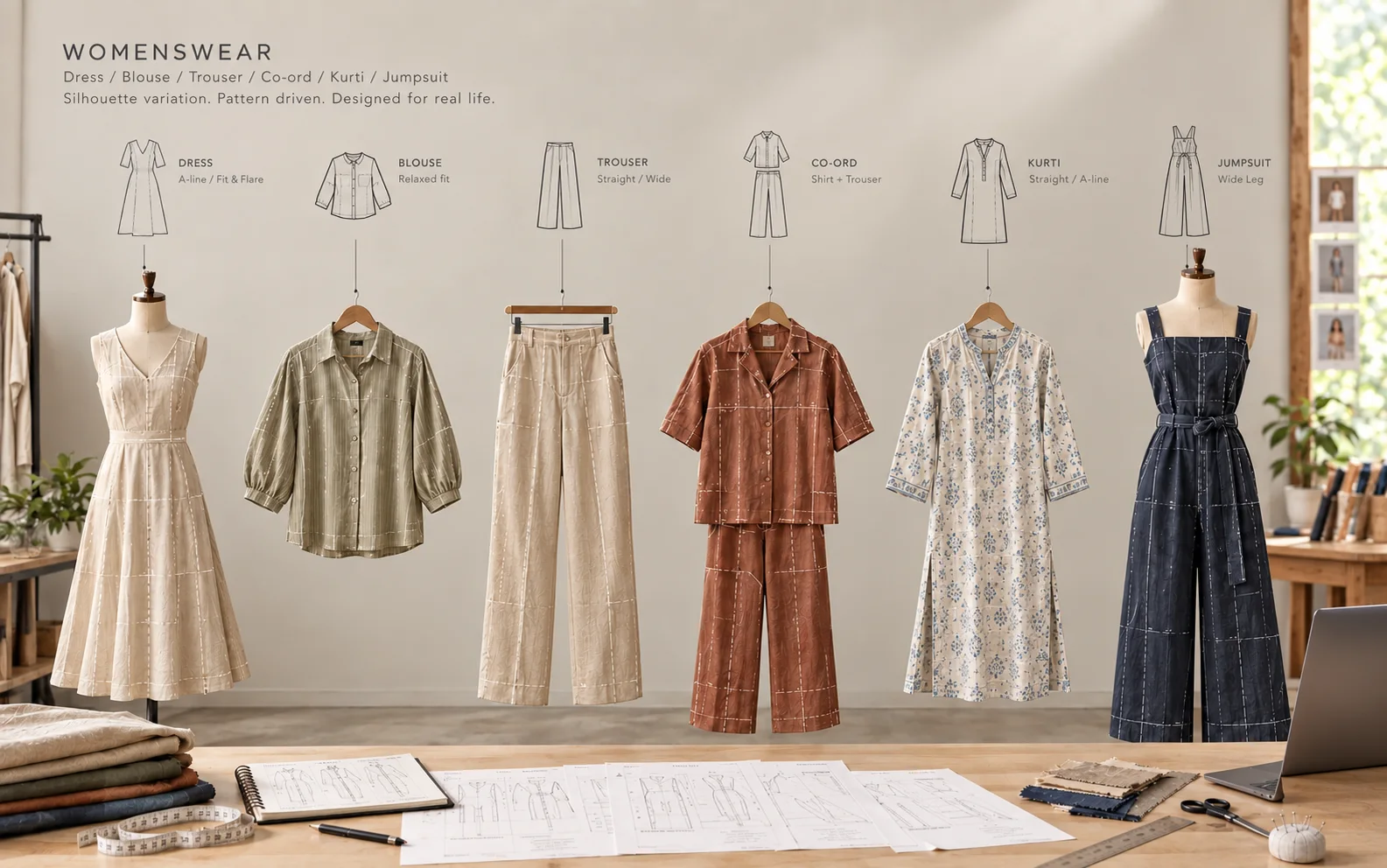
Womenswear can involve a wide range of silhouettes, proportions, construction methods, fabric behaviours and fit expectations.
Selected womenswear categories
One category. Many silhouettes: straight, A-line, fit & flare, relaxed, structured.
The pattern must follow the intended design language — not force every style into one standard block.
Technical focus
- Bust Shaping
- Dart Manipulation
- Waist Definition
- Hip Balance
- Neckline
- Sleeve Volume
- Armhole
- Shoulder
- Ease
- Garment Length
- Skirt Sweep
- Pleats
- Gathers
- Panel Lines
- Waistband
- Fit Proportion
- Fabric Drape
- Stretch
- Construction
Smaller garment. Not smaller thinking.
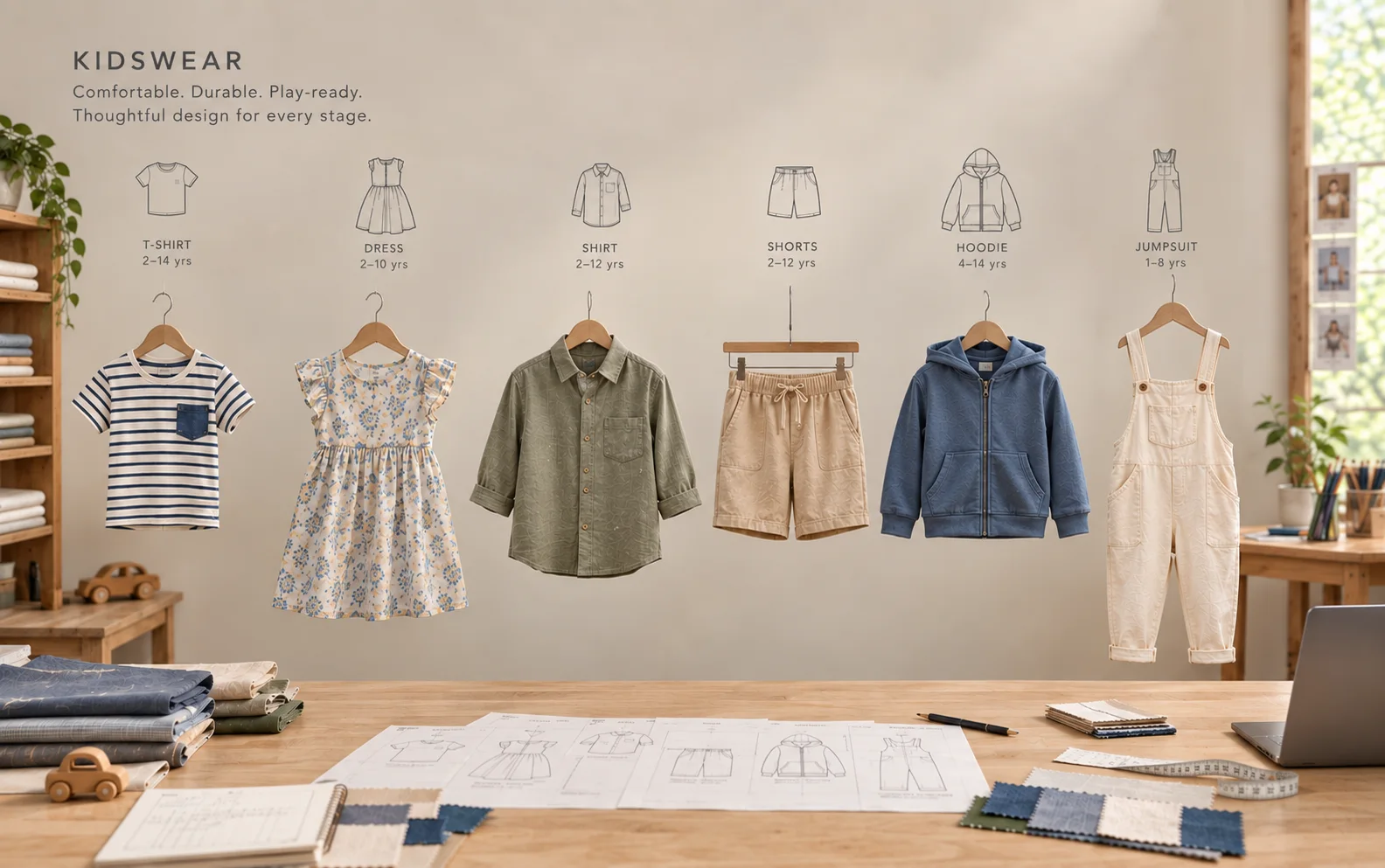
Kidswear should not be treated as adult garments simply reduced in size. Children’s garments require their own consideration of body proportion, movement, comfort, ease, age group, safety, construction, closures, fabric and growth allowance where applicable.
Selected kidswear categories
KIDSWEAR IS NOT SHRUNK-DOWN ADULTWEAR.
Technical focus
- Age-Based Proportion
- Ease
- Neck Opening
- Shoulder
- Armhole
- Sleeve
- Waist
- Seat
- Length
- Mobility
- Garment Access
- Closures
- Safety Considerations
- Soft Construction
Consistency at scale.
Uniforms often demand repeatability, functional construction and consistent sizing across large quantities.
Selected uniform categories
WHEN ONE PATTERN BECOMES THOUSANDS, CONSISTENCY MATTERS.
Technical focus
- Repeatability
- Ease of Movement
- Durability
- Functional Pockets
- Sizing
- Construction Simplicity
- Comfort
- Fabric Behaviour
- Logo / Embroidery Placement
- Production Efficiency
- Marker Planning
Built to work.
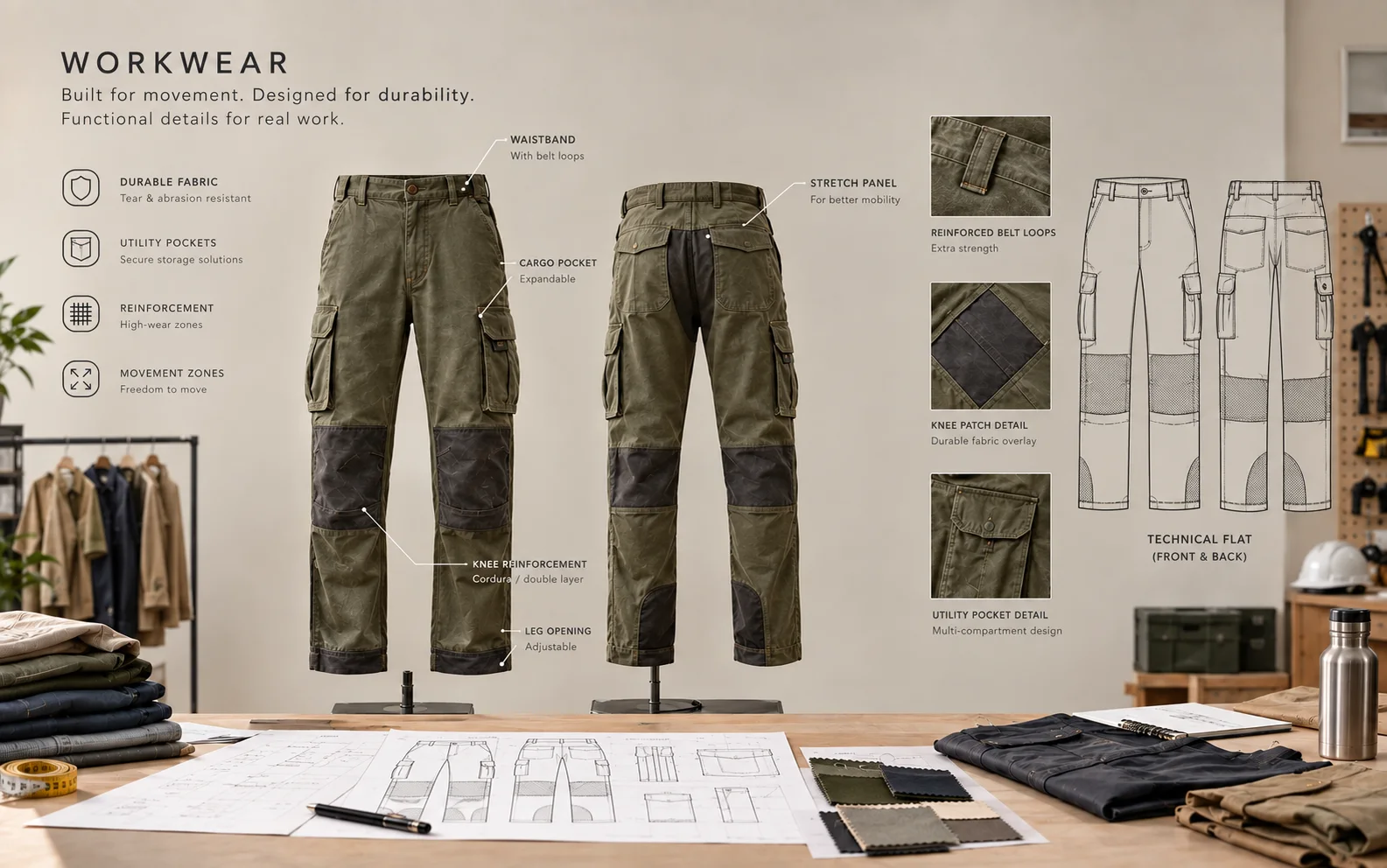
Workwear development places additional emphasis on function, movement, durability and construction.
Selected workwear categories
THE PATTERN MUST UNDERSTAND THE JOB.
Technical focus
- Mobility
- Reinforcement
- Pocket Function
- Tool Access
- Seam Strength
- Construction
- Ease
- Durability
- Rise
- Knee Position
- Elbow Movement
- Layering
- Fabric
- Functional Components
Fit at rest is not enough. The garment has to move.
Sportswear and active apparel can require a different relationship between fit, stretch, movement and construction.
Pattern Lab can support selected sportswear development depending on garment type and technical requirement.
Potential categories
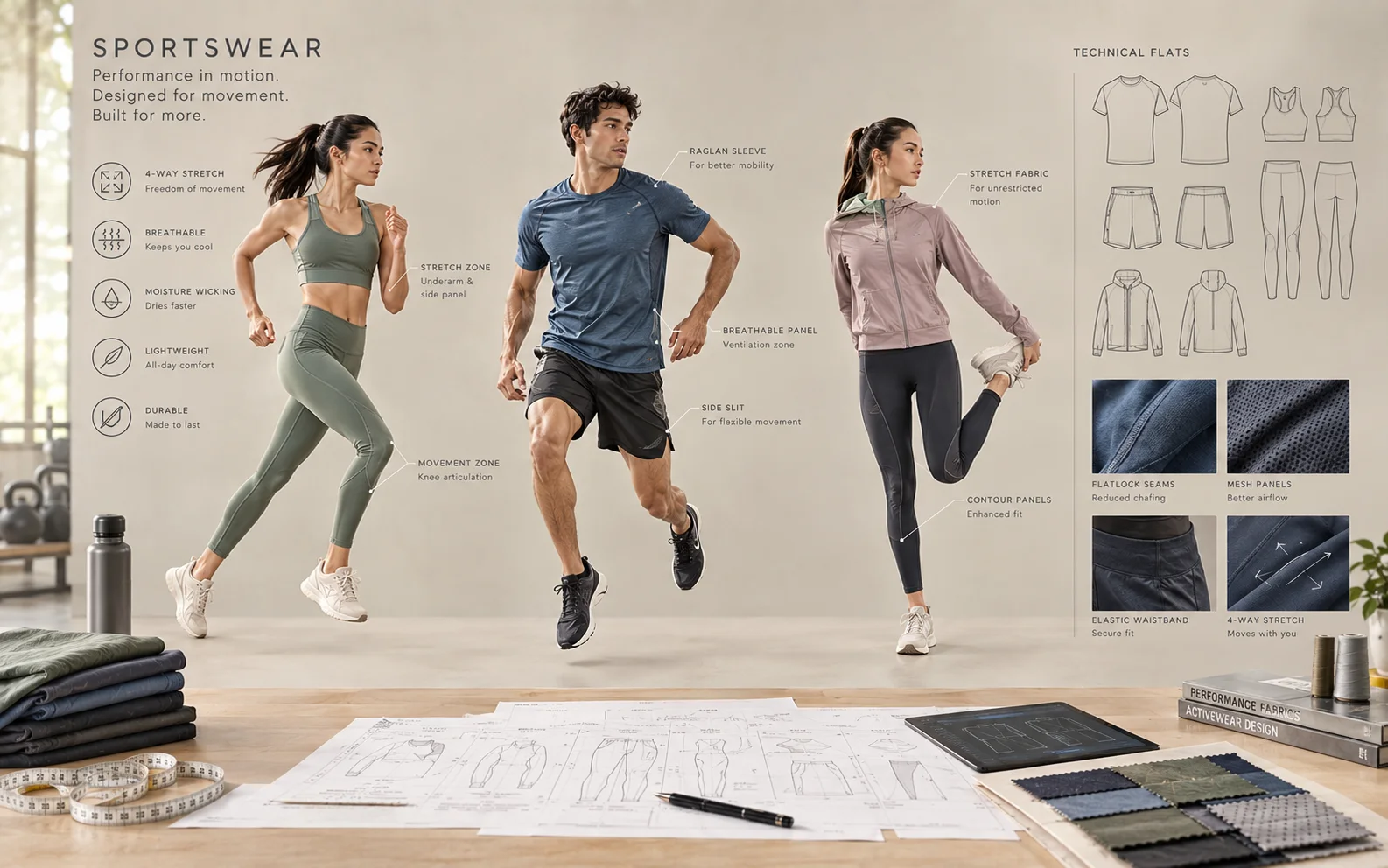
Technical focus
- Movement
- Stretch
- Recovery
- Negative / Positive Ease
- Arm Mobility
- Crotch Mobility
- Panel Placement
- Seam Position
- Ergonomics
- Fabric Direction
- Construction
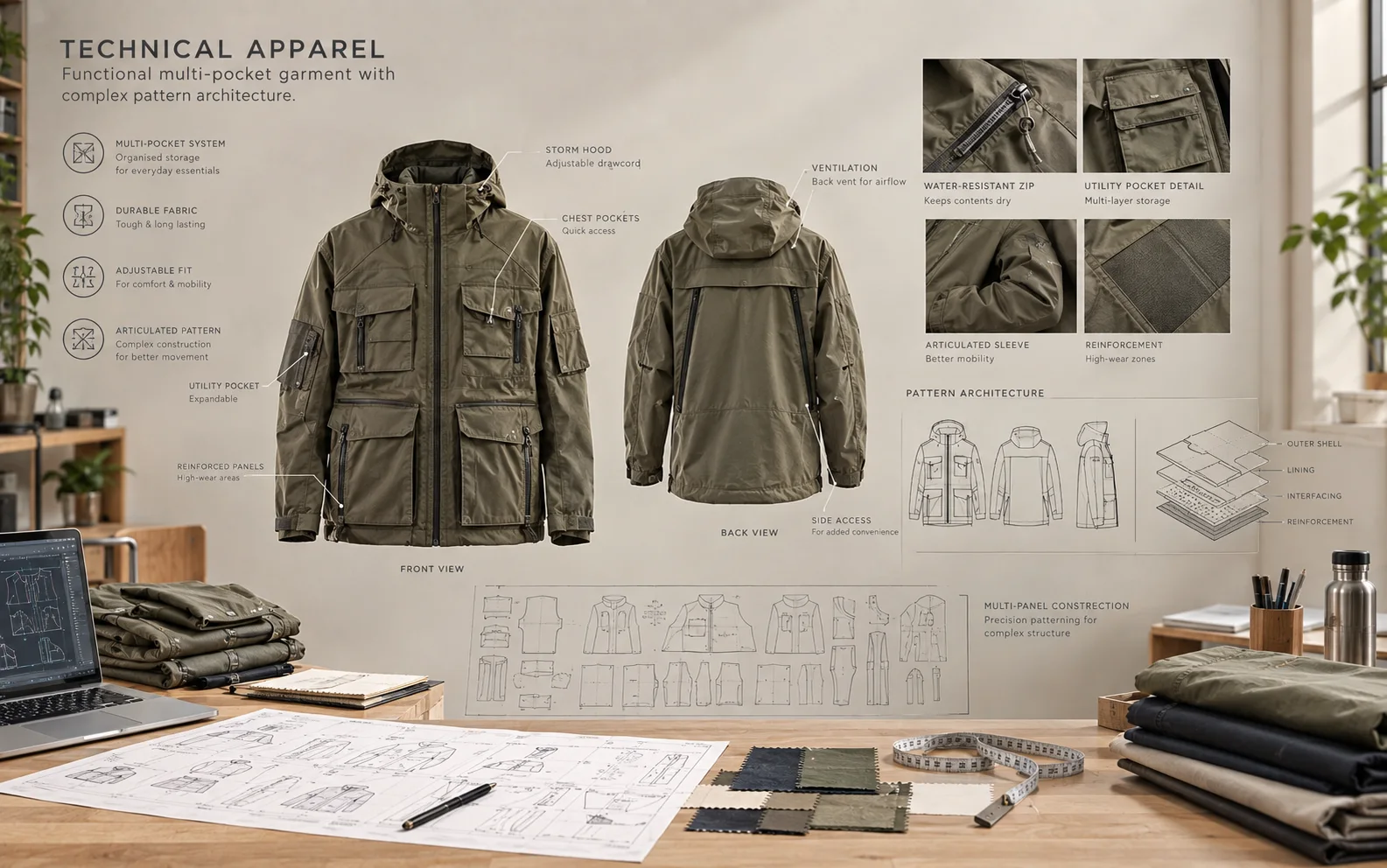
When the garment has a job to do.
Some garments are defined not only by appearance, but by function.
Pattern Lab can review selected specialised apparel projects where technical pattern development, movement, construction and product requirements must work together.
Potential categories may include
PROJECTS REVIEWED INDIVIDUALLY.
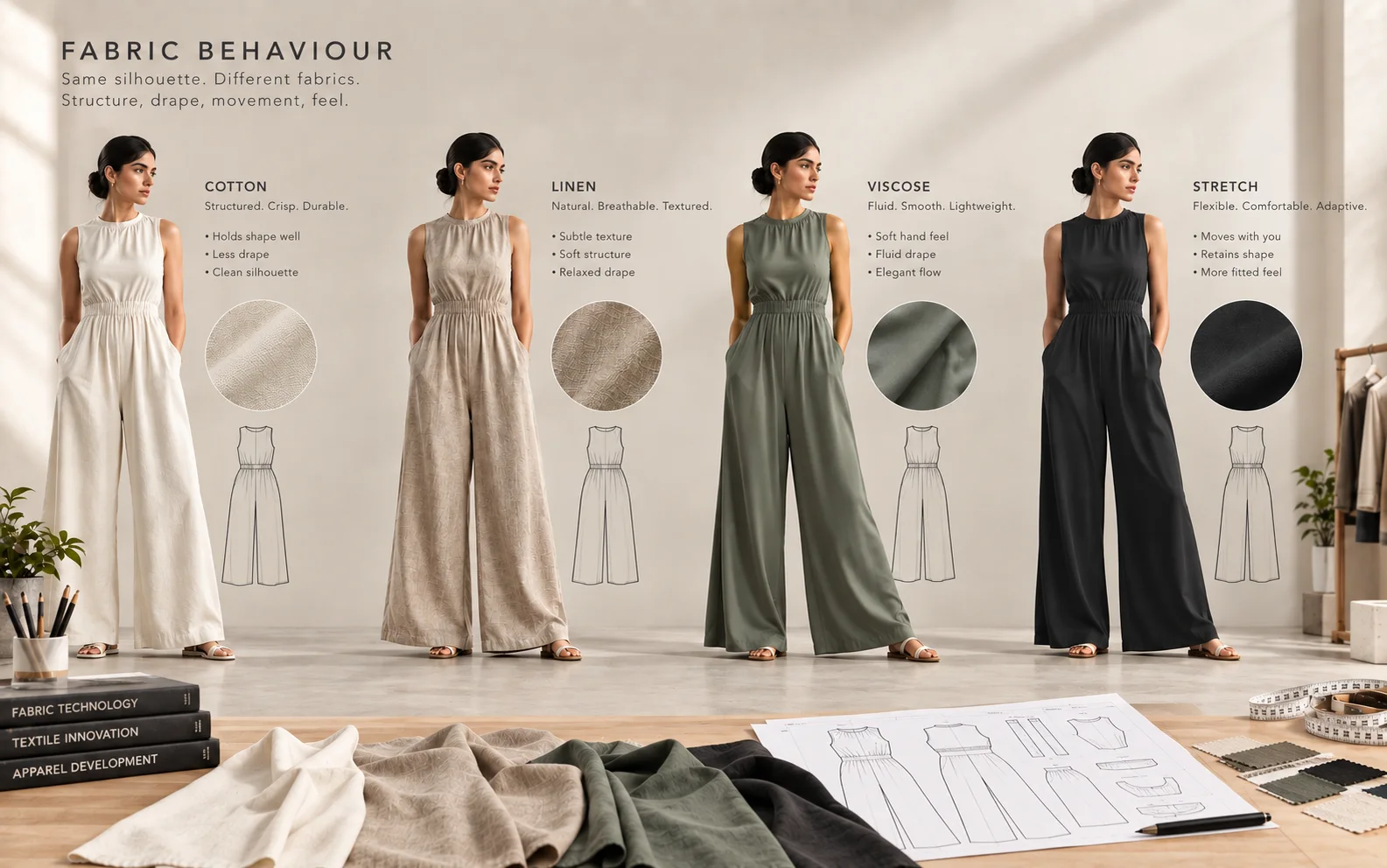
Same garment. Different fabric. Different result.
Pattern development cannot always be separated from material behaviour.
Different fabrics may vary in
The same pattern used blindly across very different fabrics may not produce the same finished garment.
THE PATTERN MUST UNDERSTAND THE MATERIAL.
Change the construction. You may change the pattern.
Construction decisions influence pattern pieces, seam allowances, component dimensions and assembly logic.
Product development works best when pattern and construction are considered together.
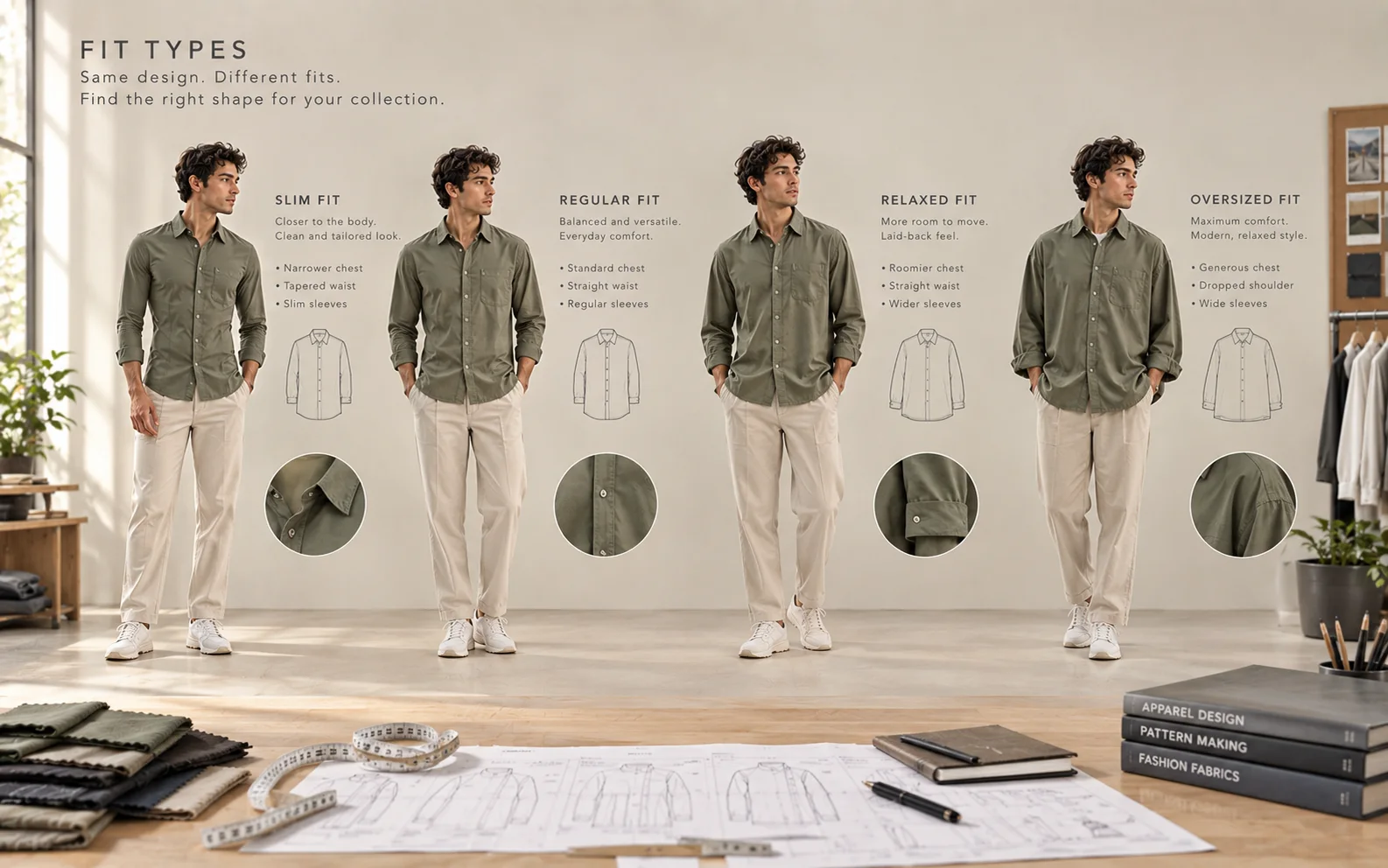
“Shirt” is not a fit.
Even within one product category, fit requirements can vary significantly.
Each requires different pattern decisions.
Different products. One connected development system.
You don’t have to start from zero.
- Have a Tech Pack?Start with Pattern Development. →
- Have a reference garment?Start with Technical Review / Pattern Development. →
- Have a sample?Start with Fit Review or Pattern Correction. →
- Have an approved base pattern?Start with Grading. →
- Ready for production?Move into Marker Planning. →
- Have paper patterns?Start with Digitisation. →
Developing a new category?
- Fashion Brands Expanding Into New Categories
- Garment Manufacturers
- Designers
- Fashion Startups
- Private Labels
- Uniform Suppliers
- Workwear Manufacturers
- Exporters
- Buying Houses
- International Apparel Brands
Pattern Lab can review the garment category, available technical information and required development stages before defining the project scope.
The garment can start with a file.
For remote customers, category development can begin from digital inputs including:
- Tech Pack
- Technical Sketch
- Measurement Chart
- Reference Images
- Existing Pattern
- Fit Comments
- Fabric Information
Where sample development is required, physical sample logistics can be defined according to the project.
What are you building?
Choosing a category opens the development form with that category already selected.
A pattern doesn’t know what category it belongs to. The pattern maker has to.
Silhouette.Fit.Fabric.Construction.Movement.End use.
ALL OF IT MATTERS.
Have a garment category to develop?
Send us the Tech Pack, sketch, measurements, existing pattern or available references.
We’ll review the garment and help define the right development path.