
From your idea to a technically developed garment.
START WHERE YOU ARE. BUILD WHAT YOU NEED.
Pattern Lab India follows a structured apparel-development workflow that can begin with a Tech Pack, measurement chart, sketch, reference garment, existing pattern or another available product reference.
Depending on what your project requires, we can support individual stages or connect pattern development, sampling, fit correction, grading and marker planning into one development path.
Not every project starts at the same place.
- Some customers arrive with a complete Tech Pack.
- Some have a sketch.
- Some have a reference garment.
- Some already have a physical pattern.
- Some have a sample that does not fit correctly.
- Some already have an approved pattern and only require grading or marker planning.
That is why Pattern Lab does not force every customer through the same process.
We first understand where the development currently stands. Then we define what needs to happen next.
ENTER THE PROCESS AT THE STAGE YOU NEED.
Clear input. Structured development. Production-ready output.
Not every project will require every stage. The actual workflow depends on the service selected and the development requirement.
Start with what you have.
The first step is to share the information already available for the garment.
You do not necessarily need to have every item before contacting Pattern Lab.
If your development information is incomplete, our team can first review what is available and identify what additional information may be required.
Better input creates better development.
The more clearly the intended garment is defined, the more efficiently technical development can proceed.
Useful information, where available
- Garment Type
- Target Customer
- Target Fit
- Finished Garment Measurements
- Base Size
- Required Size Range
- Fabric Composition
- Fabric GSM
- Fabric Stretch Where Relevant
- Expected Shrinkage Where Known
- Construction Details
- Seam Requirements
- Closures
- Pockets
- Collars
- Cuffs
- Waistbands
- Trims
- Reference Images
- Fit Expectations
- Special Functional Requirements
This information helps the technical team understand not only what the garment should look like, but how it is expected to function.
Before we draw, we understand.
Once the requirement is received, Pattern Lab reviews the available information from a technical-development perspective.
What the review may consider
- Garment Category
- Silhouette
- Measurements
- Construction
- Fabric
- Fit Requirement
- Existing Pattern Information
- Sample Requirement
- Size Range
- Grading Requirement
- Marker Requirement
- Reference Product
- Technical Complexity
- Areas Requiring Clarification
The purpose of this stage is to reduce assumptions before development begins.
DON’T DEVELOP FROM GUESSWORK.

Define the work before starting the work.
After reviewing the requirement, the project scope is defined. For example:
Defining the scope helps both sides understand
- What Pattern Lab is responsible for.
- What the customer needs to provide.
- What deliverables are expected.
- What stages are included.
- What stages are not included.
CLEAR SCOPE. CLEAR DEVELOPMENT.
The requirement defines the quote.
Pattern-development requirements can vary significantly depending on garment type, complexity, number of pattern pieces, sample requirement, size range, grading, marker planning, correction rounds and technical scope.
For this reason, Pattern Lab does not need to force every project into one standard price.
Once the project requirement has been understood, a quotation can be prepared for the agreed scope.
What the quotation identifies, where applicable
- Service
- Garment / Style
- Quantity of Styles
- Pattern Development
- Sample Development
- Grading
- Marker Planning
- Digitisation
- Additional Technical Requirement
- Applicable Revision Scope
- Commercial Terms
- Payment Terms
- Expected Deliverables
- Applicable Lead Time
Scope approved. Development starts.
Once the commercial scope and required project information are confirmed, the development is opened internally and receives a Pattern Lab project reference.
Project information can include
Build the garment architecture.
Pattern development begins using the confirmed measurements, silhouette, garment construction, fabric information and project requirement.
What development can involve
- Base Pattern
- Pattern Shaping
- Garment Ease
- Balance
- Armhole
- Sleeve
- Collar
- Cuff
- Placket
- Waistband
- Rise
- Seam Allowance
- Hem Allowance
- Notches
- Grain Lines
- Construction Relationships
- Shrinkage Consideration Where Applicable
The objective is to translate the intended garment into technically workable pattern geometry.
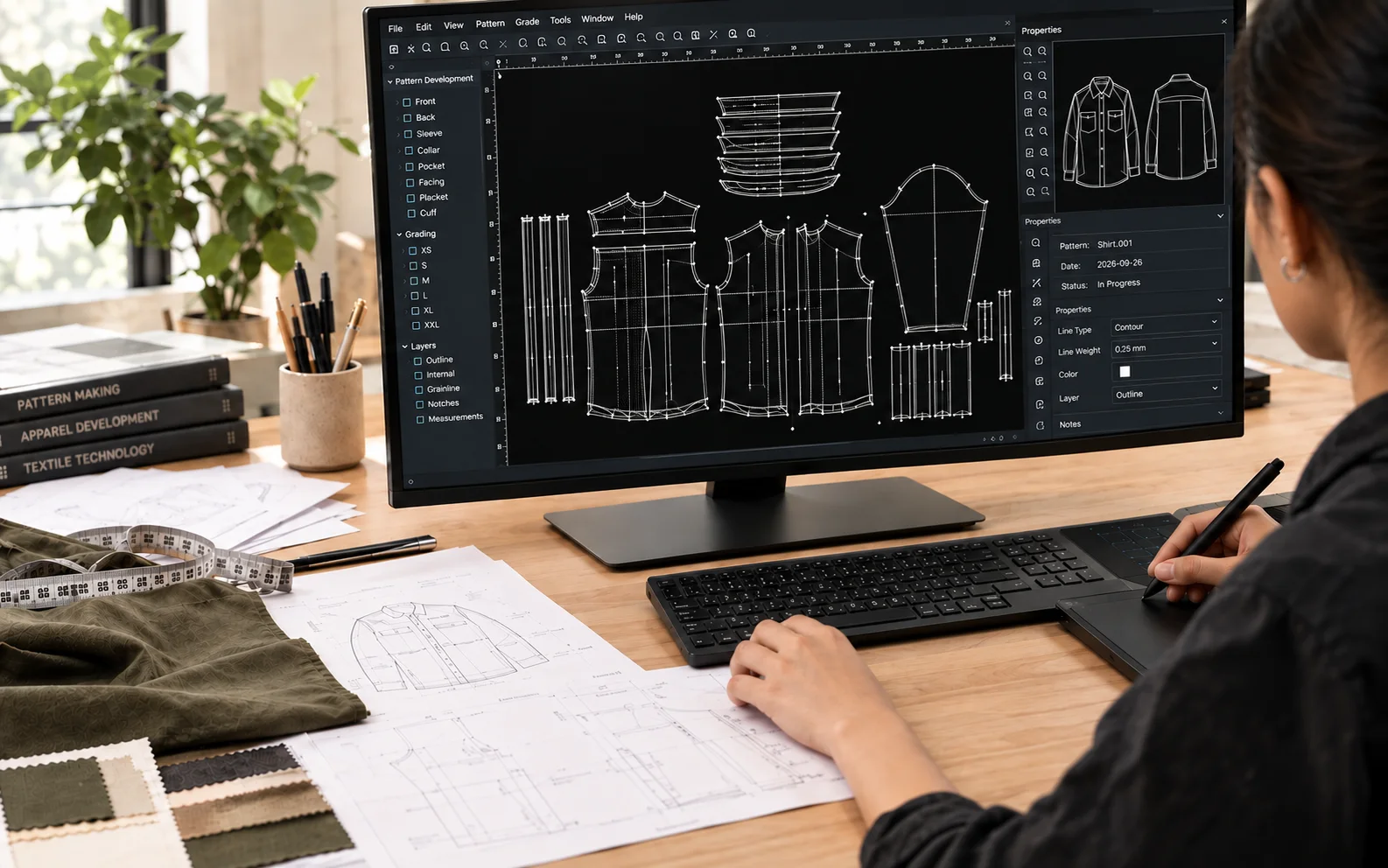
Turn the pattern into a garment.
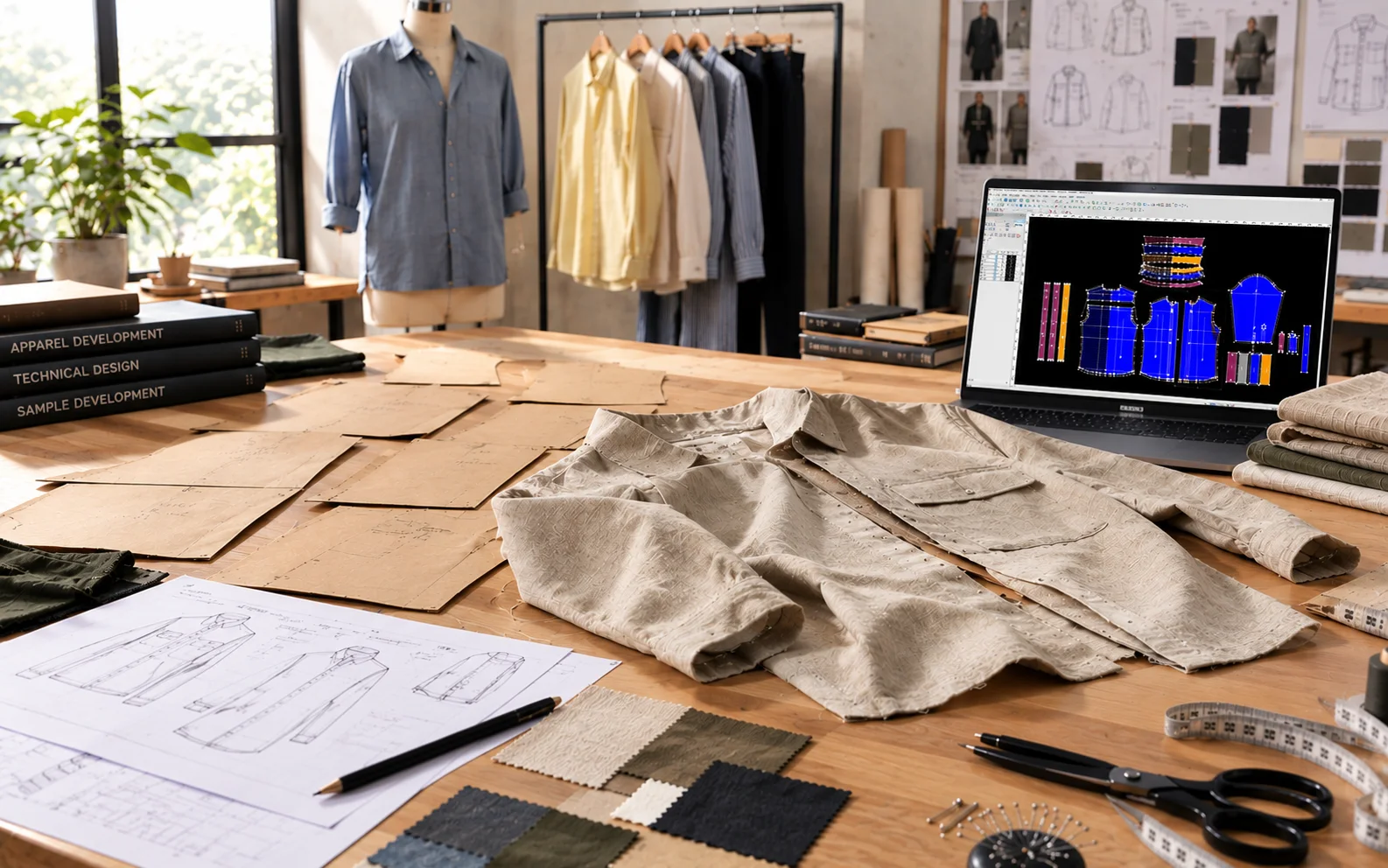
Where physical sample development is part of the agreed project scope, the developed pattern moves into sample creation.
- PATTERN
- FABRIC PREPARATION
- CUTTING
- SAMPLE STITCHING
- FINISHING
- MEASUREMENT CHECK
- FIT / TECHNICAL REVIEW
The purpose of the sample is not simply to produce one finished piece. It is to test the development.
Fabric influences drape, ease, stretch, relaxation, shrinkage, bulk, construction and silhouette. For meaningful fit and technical review, the sample fabric should ideally represent the intended bulk material as closely as practical. Where the final bulk fabric is unavailable, any substitute should be selected with awareness that differences in material behaviour may influence the sample result.
Measure what was built.
The completed sample can be checked against the intended garment measurements.
Measurement points the review may include
- Chest
- Waist
- Seat / Hip
- Shoulder
- Body Length
- Sleeve Length
- Armhole
- Collar
- Cuff
- Across Back
- Across Front
- Rise
- Inseam
- Outseam
- Thigh
- Knee
- Bottom Opening
- Other Style-Specific Points
Measurement review helps identify measurable differences between intended specifications and the actual sample.
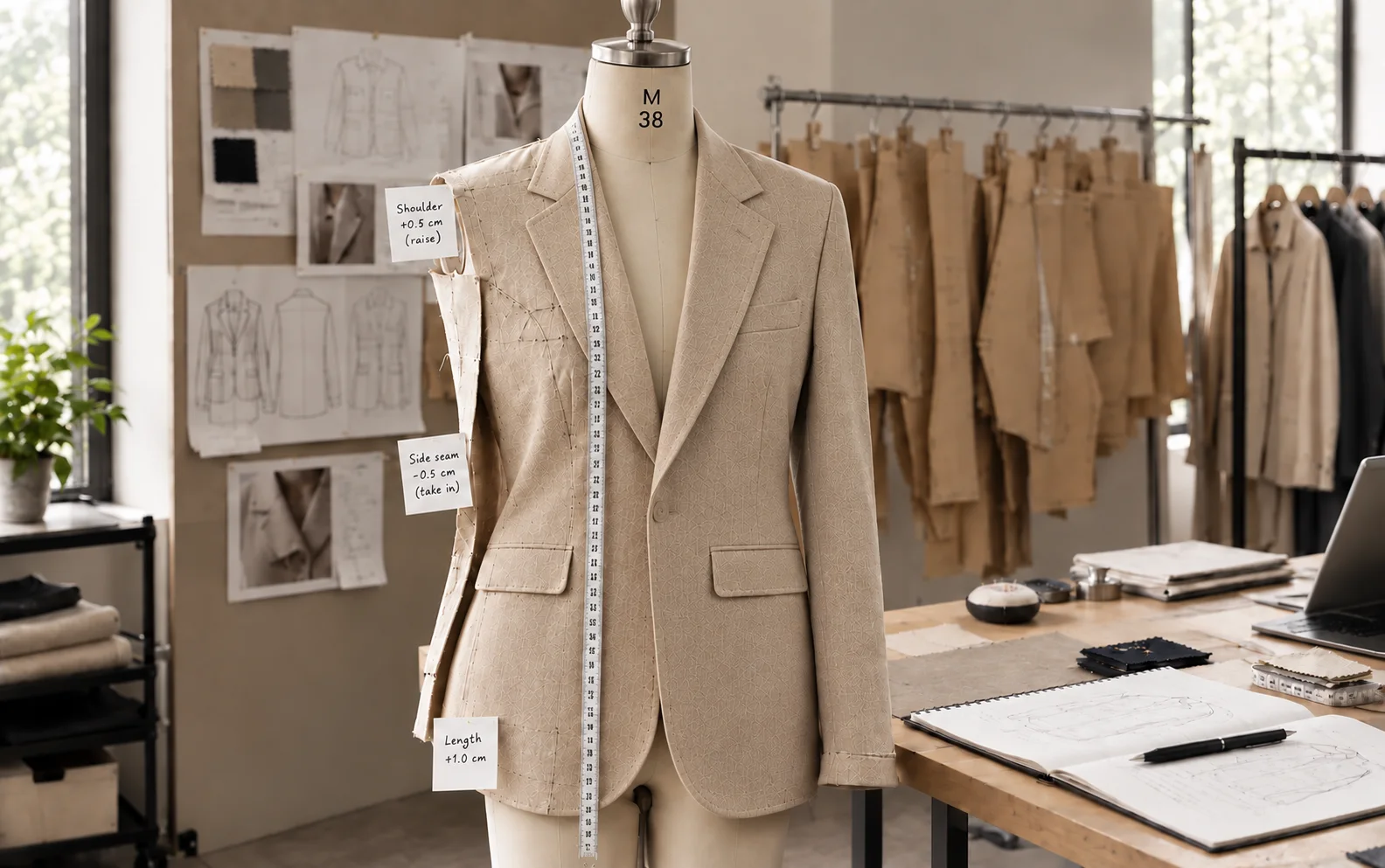
Measurements can pass. The fit can still fail.
A technically meaningful fit review looks beyond individual numbers.
Areas Pattern Lab may review
- Garment Balance
- Shoulder Position
- Chest
- Back
- Armhole
- Sleeve Pitch
- Collar
- Ease
- Side Seam Position
- Hem Balance
- Waist
- Seat
- Crotch
- Movement
- Proportion
- Construction Interaction
This is where the physical garment begins communicating what the pattern needs next.
Your comments become technical input. Annotated fit photos, measurement comments and reference images help most. Instead of “Make the sleeve better”, prefer “Sleeve is rotating toward front. Please review sleeve pitch and armhole relationship.”

Correct the pattern. Not just the sample.
Fit comments and technical observations are translated back into pattern corrections.
- PATTERN_REV_01
- PATTERN_REV_02
- PATTERN_REV_03
- APPROVED
Revision examples
- Length Adjustment
- Width Adjustment
- Balance Correction
- Shoulder Correction
- Armhole Correction
- Sleeve Correction
- Collar Correction
- Crotch Correction
- Waistband Correction
- Ease Adjustment
- Component Adjustment
- Construction Modification
Every change needs a version. Updated patterns follow clear revision control, so old and revised versions are never confused.
Freeze what works.
Once the required development stage has been reviewed and accepted, the approved pattern becomes the technical base for the next stage.
Depending on the project, the next stage may be
Grading should ideally begin from an approved base pattern. Scaling an unresolved pattern issue across multiple sizes simply multiplies the problem.
APPROVE THE BASE. THEN SCALE IT.
One approved size. Build the range.
Where grading is required, the approved base pattern is developed into the required size range according to the agreed measurement chart or grade rules.
The grading stage should preserve the intended relationship between size, proportion and fit.
Now make the pattern work with the fabric.
After the required graded sizes are available, markers can be developed according to the production requirement.
Marker information may include
- Fabric Width
- Size Ratio
- Quantity
- Pattern Pieces
- Grain
- Nap
- One-Way Requirement
- Checks / Stripes Where Applicable
- Technical Cutting Restrictions
- Marker Efficiency
- Estimated Consumption
Development complete. Now make it repeatable.
Depending on the agreed project, final outputs may include
The exact file type and deliverable structure is agreed according to the customer’s software, production environment and project scope.
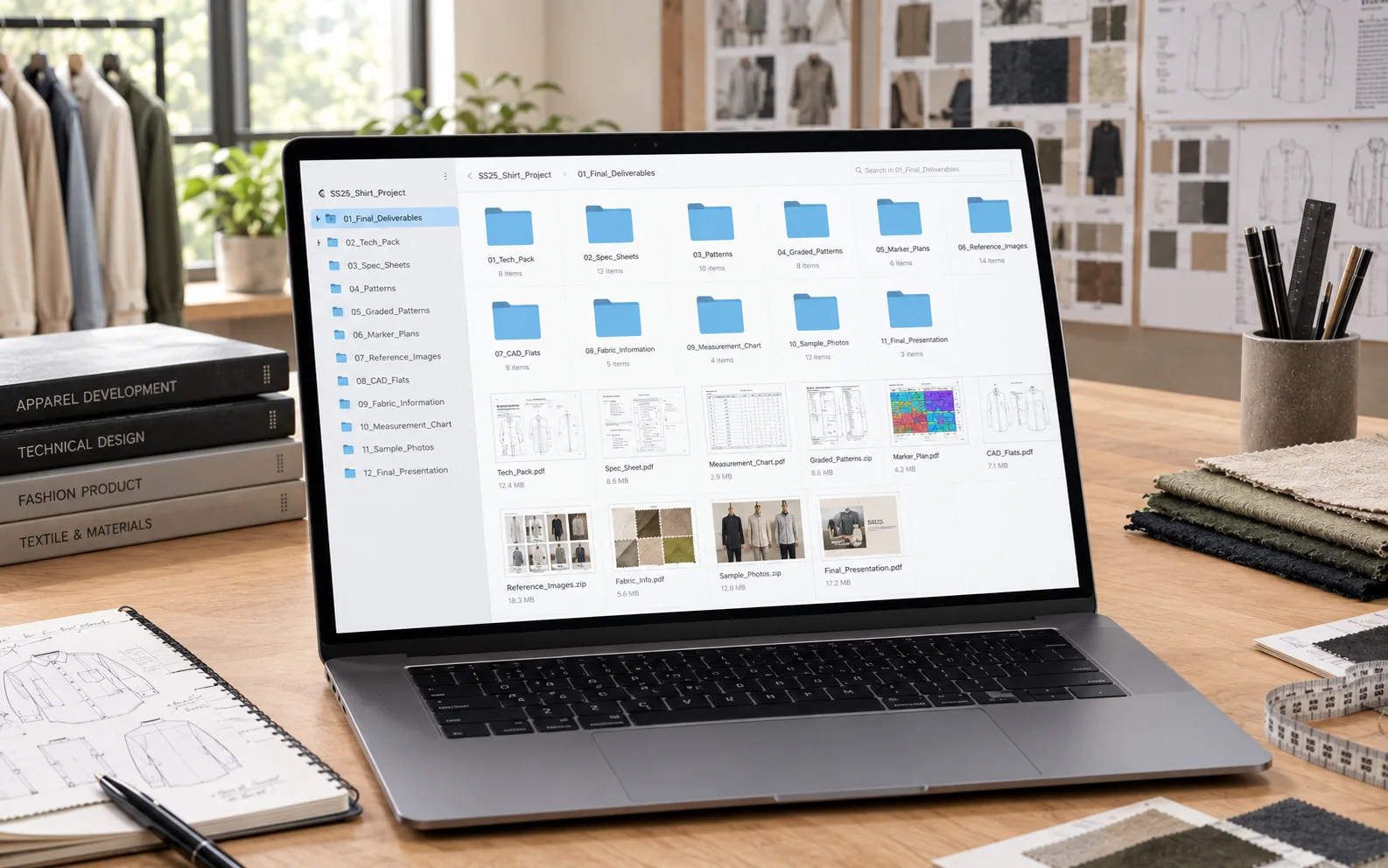
Use the whole system. Or just the part you need.
Pattern Lab services do not need to be purchased as one full package.
- Need only a digital pattern?Start at Pattern Development. →
- Already have an approved pattern?Start at Grading. →
- Already have graded patterns?Start at Marker Planning. →
- Have a sample with fit problems?Start with Fit & Pattern Correction. →
- Have hundreds of physical patterns?Start with Pattern Digitisation. →
- Need multiple stages?Use Connected Technical Development. →
No Tech Pack? That doesn’t always mean you can’t start.
Depending on the garment and requirement, Pattern Lab may be able to begin technical discussion from:
The team can review the available information and advise what additional technical inputs may be required.
Your file can arrive first.
Many stages of apparel technical development can be coordinated remotely. A customer can digitally share:
- Tech Packs
- Measurements
- Sketches
- Fit Comments
- Reference Images
- Existing Digital Patterns
- Fabric Information
Pattern Lab can then review and develop the technical requirement from India.
Where physical sample development, reference garments or fabric are involved, courier and sample-review arrangements can be agreed according to the project.
INDIA-BASED. BUILT TO COLLABORATE REMOTELY.
Clear development needs clear communication.
Approvals that are documented
- Pattern Development Approved
- Sample Measurements Approved
- Fit Comments Received
- Base Pattern Approved
- Grading Approved
- Marker Approved
- Final Files Released
WhatsApp supports quick coordination, but key approvals and project files are also recorded through structured written communication. A WhatsApp “OK” should not be the entire system.
Your product should stay your product.
Apparel development can involve:
Pattern Lab understands that these materials can form part of the customer’s intellectual property and development process.
Customer files are handled only for the agreed project purpose. NDA-based arrangements can be supported where agreed.
Different projects need different development time.
The time required for development depends on factors such as:
Rather than making one unrealistic promise for every garment, timelines are defined after reviewing the actual project scope.
REVIEW FIRST. COMMIT SECOND. DELIVER TO THE AGREED PLAN.
Development works both ways.
Efficient development depends on timely information from both Pattern Lab and the customer.
Customers should ideally provide
- Clear Requirements
- Available Tech Pack / Measurements
- Fabric Details
- Reference Information
- Prompt Clarifications
- Consolidated Fit Comments
- Approval Decisions
- Required Size Range
- Required Delivery Format
Pattern Lab provides
- Clear Scope
- Technical Review
- Structured Development
- Revision Control
- Project Communication
- Agreed Deliverables
- Defined Commercial Terms
Clarity saves time.
Potential delays can occur when:
- Measurements are incomplete.
- Multiple conflicting measurement charts are supplied.
- Fabric changes after pattern development.
- Construction changes after sampling.
- Fit comments are contradictory.
- Size range changes late.
- Sample fabric behaves very differently from bulk fabric.
- Reference garment changes.
- Approvals are delayed.
- Bulk requirements change during development.
The earlier these changes are identified, the easier they are to manage.
Questions before you start.
Do I need a Tech Pack?
A complete Tech Pack is ideal because it centralises important garment information. However, depending on the project, Pattern Lab may be able to begin discussion using measurements, sketches, reference garments, images, samples or existing patterns.
Can I send a reference garment?
Yes, where relevant to the development. The team can review the reference garment together with the intended measurements, fit and design changes.
Can I send an existing pattern?
Yes. Existing physical or digital patterns can be reviewed depending on the service required.
Can Pattern Lab make the sample too?
Sample development can be included where agreed as part of the project scope.
Can you correct my existing sample?
Pattern Lab can review fit and pattern-related issues where sufficient technical information is available.
Should grading happen before the base pattern is approved?
The preferred approach is generally to resolve and approve the base pattern before developing the complete size range.
Can you prepare a marker?
Yes, marker planning can be developed using the required patterns, fabric width, size ratio and relevant technical conditions.
Can I use only one service?
Yes. Customers may engage Pattern Lab for an individual service or for multiple connected development stages.
Can projects be handled remotely?
Many development stages can begin and be coordinated digitally. Where physical samples, fabric or reference garments are required, logistics can be agreed according to the project.
Do you work with international customers?
Pattern Lab India is structured to support remote enquiries and development.
Are my files confidential?
Pattern Lab handles submitted development files as confidential project information, used only for the agreed project purpose. NDA arrangements can be discussed where required.
How many revisions are included?
Revision scope is defined in the project quotation because the requirement can differ by style and service.
How long does development take?
Lead time depends on garment complexity, available information, sample requirement, corrections and overall project scope. Timelines are confirmed after technical review.
Where are you right now?
Ready to start the development?
Share your available garment information with Pattern Lab India.
We’ll review where the product currently stands and help define the appropriate technical development stage.